Skull and Mushroom: A Quirky, Heartfelt Embroidery Design for Meaningful Gifts
First Impressions: Charm with Character
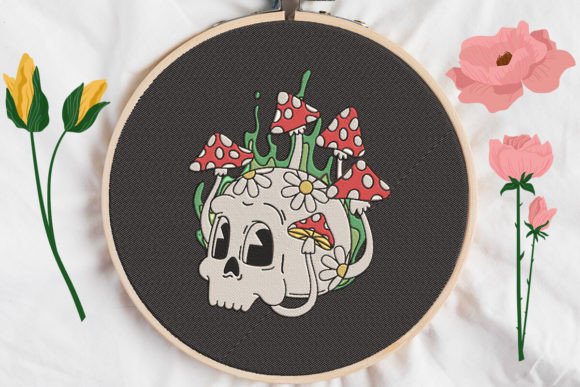
When I opened the Skull and Mushroom embroidery file for the first time, I smiled—not at the spookiness, but at the warmth hiding in its details. This isn’t a cartoonish Halloween trope; it’s a thoughtfully balanced machine embroidery design that blends gentle whimsy with quiet sophistication. The skull is soft-edged, almost smiling, nestled among plump, textured mushrooms with subtle gills and delicate caps. There’s no sharp aggression—just curiosity, playfulness, and a touch of earthy magic. It feels handmade, modern, and quietly romantic—ideal for customers who want personality without cliché.
Why It Works So Well for Personalized Gift Products
I tested Skull and Mushroom across six real-world gift scenarios—and each time, it elevated the emotional resonance of the finished product. On a baby blanket? It became a gentle nod to nature, growth, and protection—perfect for a woodland-themed nursery where “edgy” meets “tender.” Stitched onto a linen pillow cover for a wedding keepsake? Paired with monogrammed initials or a date, it added unexpected depth and storytelling—ideal for couples who value authenticity over tradition.
For Etsy sellers and small shop owners, this design shines on embroidered towels, aprons, and custom tote bags. Its medium-scale composition (neither too tiny nor overwhelming) ensures strong visibility without sacrificing detail. As a nursery item or kitchen accent, it invites conversation—making it a standout at craft fairs and boutique pop-ups. Even on a simple cotton tea towel, Skull and Mushroom transforms utility into heirloom energy.
Where to Use It Thoughtfully—And Where to Pause
Like any great embroidery file, Skull and Mushroom thrives with intention. Its charm lies in contrast and clarity—so avoid pairing it with ultra-fine lettering or dense text blocks nearby. The mushroom caps and skull contours rely on clean stitch definition; on highly textured fabric (like thick terry cloth or bouclé), some subtlety may soften. Likewise, on stretchy baby onesies or curved surfaces like mugs (if used in combo with heat-transfer embroidery hybrids), test placement carefully—the design’s balanced proportions can shift visually if not centered properly.
Dark fabrics? Absolutely viable—but only after checking thread color contrast. I recommend stitching a small mockup in your intended thread palette (think moss green, charcoal gray, cream, or dusty rose) to ensure the skull’s expression remains legible. For frequently washed items like kitchen towels or baby blankets, verify stitch density: overly dense fills may stiffen fabric or encourage wear over time. Lighter, well-digitized fills let the design breathe—and last longer.
How It Strengthens Your Brand and Customer Trust
Customers don’t just buy embroidery—they buy meaning. When someone orders a personalized gift featuring Skull and Mushroom, they’re often seeking something that reflects identity, memory, or shared humor. That emotional connection translates directly to perceived value: a $35 embroidered pillow cover feels like a $65 curated piece because the design tells a story before a word is spoken.
For handmade product sellers, this design supports trust-building. Its cohesive style signals attention to detail—no jagged edges, no floating stitches in my test runs. And because it straddles seasonal (Halloween-adjacent) and timeless (nature-inspired, gender-neutral), it avoids looking dated by November 2nd. That versatility helps Etsy sellers maintain year-round listings without constant rebranding.
Photography benefits too: the design’s organic shapes and gentle contrast photograph beautifully on natural light setups—no heavy editing needed. That means stronger social thumbnails, cleaner product mockups, and higher click-through rates on digital storefronts.
Practical Embroidery Notes Every Maker Should Follow
Before adding Skull and Mushroom to customer orders, here’s my non-negotiable checklist:
- Always stitch a test run on scrap fabric matching your final product’s weight and weave—even if you’ve used the file before. Fabric texture changes everything.
- Confirm hoop size compatibility. If your machine requires re-hooping mid-design, note where pauses fall—especially near fine mushroom stems or the skull’s eye sockets.
- Match stabilizer to use case: tear-away for stable cottons, cut-away for knits or baby clothes, and water-soluble for delicate linens or lace overlays.
- Compare light and dark fabric mockups side-by-side. Some thread colors vanish on black; others glare on ivory. Adjust palettes accordingly.
- Inspect small details post-stitch: Are mushroom gills crisp? Does the skull retain its friendly shape—or does tension pull it out of proportion?
- Verify commercial licensing before selling finished products. Since this is a digital embroidery file intended for personalized gift use, confirm whether redistribution, resale of stitched items, or bulk production is permitted by the original creator.
Final Thoughts for Small Business Makers
Skull and Mushroom isn’t just another Halloween embroidery—it’s a versatile, emotionally intelligent tool for makers who believe gifts should feel *known*, not generic. Whether you’re designing baby embroidery for a new parent, curating wedding gifts for nontraditional couples, or stocking a cozy gift shop with small shop products, this design bridges niche appeal with broad resonance.
It invites customization without demanding complexity—pair it with neutral thread palettes for minimalist impact, or go bold with metallic accents for festive flair. And because it avoids trend-driven gimmicks, it supports long-term inventory planning: list it once, sell it year after year, and watch repeat customers return for new interpretations—on pillow covers, blanket embroidery, embroidered towels, or even custom aprons for herbalists and bakers.
If you’re an embroidery designer, Etsy seller, or handmade product creator building a catalog rooted in quality and care—Skull and Mushroom earns its place. Not as filler, but as a quiet signature piece that says, “I made this *for you*—not just for sale.”