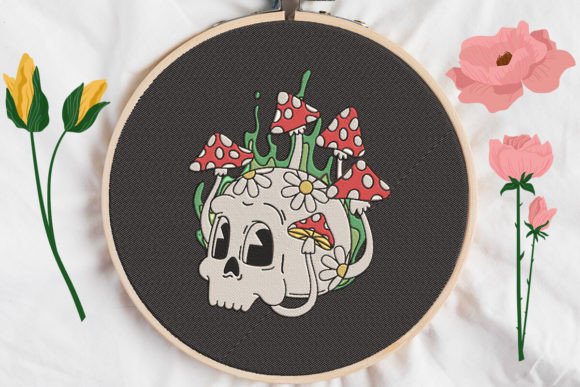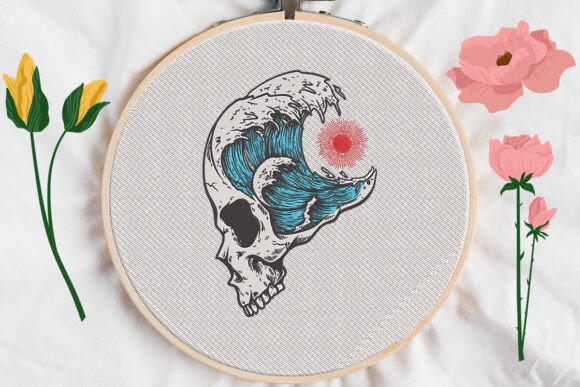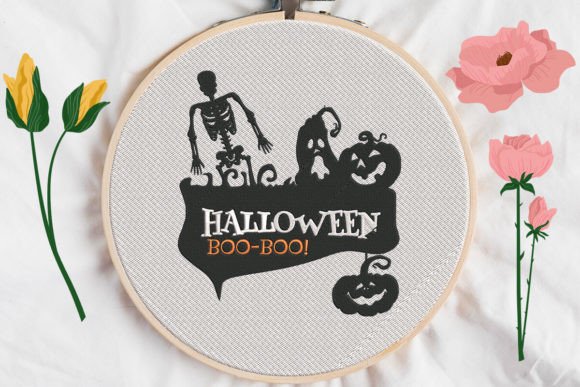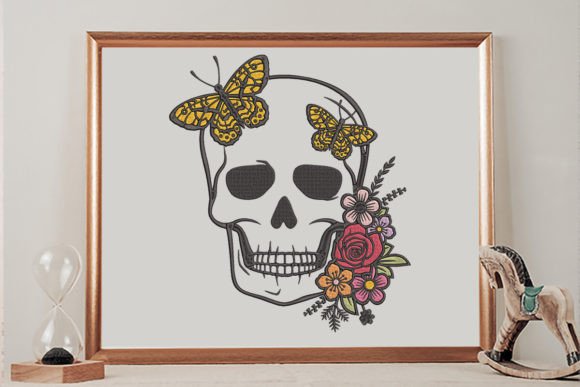
Skull and Butterfly Embroidery Design
First Impression: Bold, Playful, and Instantly Recognizable
As an embroidery designer who’s prepped over 200 craft fair booths, I’ll say it straight: Skull and Butterfly lands with confident contrast. It’s not spooky-serious like a gothic motif, nor is it cutesy-pumpkin-tier—it straddles that sweet spot where Halloween charm meets wearable art. Think “modern macabre”: clean lines, balanced negative space, and symbolic duality (mortality meets transformation). That tension makes it memorable on a crowded table. Customers pause—not because it’s loud, but because it feels intentional, layered, and quietly sophisticated.
Where Skull and Butterfly Shines in Real Craft Fair Displays
In my booth setup—tote bags stacked upright, aprons draped over a ladder shelf, tea towels folded beside embroidered patches—Skull and Butterfly consistently draws attention on three key items:
- Tote bag design: Centered on natural canvas or black denim, it reads clearly from six feet away. The skull’s outline and butterfly’s wing shape hold up beautifully at 4–5 inches wide—large enough to read, small enough to keep the bag functional and uncluttered.
- Embroidered patch: As a sew-on or iron-on, this design translates exceptionally well. Its defined edges and moderate detail prevent fraying during cutting, and the contrast between skull structure and delicate wing veins gives it heirloom texture—not flat or cartoonish.
- Tea towel embroidery: On flour-sack cotton or linen-blend towels, Skull and Butterfly adds artisanal weight without overwhelming. Positioned near the hem or corner, it becomes a conversation starter (“Is that a *real* skull? Is the butterfly stitched separately?”), which boosts engagement and upsell potential.
What Works—and What Needs Careful Execution
This isn’t a “drop-in-and-embroider” file for every surface. As a working designer, I’ve tested Skull and Butterfly across substrates—and here’s what I’ve learned:
- On curved surfaces (caps, pouches): The skull’s symmetrical base adapts well, but avoid placing the full design across the crown seam. Opt for side-embroidery placement to preserve clarity of the butterfly’s wing details.
- On textured fabric (terry cloth, heavy linen, burlap): Stitch density matters. If the original file packs fine detailing into tight spaces—like antenna filaments or skull tooth gaps—those areas may blur. Always test on scrap with your target fabric and stabilizer combo.
- On dark fabric: This design thrives with high-contrast thread colors (e.g., bright fuchsia butterfly on charcoal twill, silver-gray skull on navy canvas). Avoid low-contrast combos—subtlety kills visibility at craft fair distance.
- At smaller sizes (under 3 inches): The butterfly’s wing veins and skull eye sockets risk merging. For patches under 2.5”, request a simplified version—or use it as a large focal piece only.
Photography, Listings, and Online Conversion Power
Skull and Butterfly photographs exceptionally well for Etsy sellers and digital embroidery shops. Its strong silhouette and inherent storytelling mean even flat-lay shots pop—no need for elaborate staging. A single well-lit photo of the design on a folded tea towel, next to a vintage brass pin and dried lavender sprig, conveys handmade quality and seasonal relevance instantly. For printable mockups, it scales cleanly across device previews (phone, tablet, desktop), making it ideal for digital embroidery file listings where buyers preview before purchase.
That visual strength also supports brand consistency. Whether you’re selling under “Midnight Stitch Co.” or “Hearth & Hollow Goods,” Skull and Butterfly reinforces a cohesive aesthetic—neither mass-produced nor overly niche. It fits seamlessly alongside other Halloween embroidery designs while standing apart through its balance of edge and elegance.
Production Practicality for Small Shop Owners
For batch production—say, 25 tote bags or 40 patches—Skull and Butterfly delivers reliability. It’s not stitch-heavy like photorealistic florals, so hoop time stays efficient. But don’t skip these steps before cutting fabric:
- Test the embroidery file on scrap fabric matching your final product’s weight and weave.
- Check thread contrast—especially where skull shading meets butterfly wings. Muted gradients can disappear on busy prints.
- Review spacing between elements. Does the butterfly hover convincingly above the skull, or does stitching pull them too close?
- Confirm hoop size compatibility. Some versions may require a 5x7" hoop minimum—critical if you’re using compact machines common among home-based Etsy sellers.
- Inspect stitch density in the skull’s cranium area and wing membranes. Over-stitching causes puckering; under-stitching loses definition.
- Use appropriate stabilizer: cut-away for knits, tear-away for stable wovens, and fusible + tear-away for tea towels with nap.
- Create at least one real mockup—not just a digital preview—before committing to full production.
- Compare how it looks on light vs. dark fabric swatches. Value perception shifts dramatically based on contrast.
- Verify commercial licensing terms. Since this is marketed as a machine embroidery design for apparel and home decor, confirm whether resale of finished products is permitted without additional fees.
Final Verdict for Craft Fair Sellers and Creative Entrepreneurs
Skull and Butterfly isn’t just another Halloween embroidery design—it’s a versatile, mood-driven asset that elevates your entire craft fair product line. It adds depth to simple items (a plain black tote becomes statement-worthy), builds perceived value (customers pay more for thoughtful symbolism), and strengthens booth cohesion (pair it with subtle bat motifs or moon-phase patches for a curated look). It invites questions, encourages touch, and converts browsers into buyers—especially among shoppers seeking handmade products with personality, not just seasonal filler.
Yes, it demands attention to fabric choice, stabilizer, and thread selection—but that’s where your expertise shines. When executed well, Skull and Butterfly doesn’t just sell. It represents your craftsmanship, tells your story, and keeps customers coming back—not just for Halloween, but for whatever comes next.