Rabbit with Orchid Flower
A Whimsical Pairing That Feels Intentional—Not Just Cute
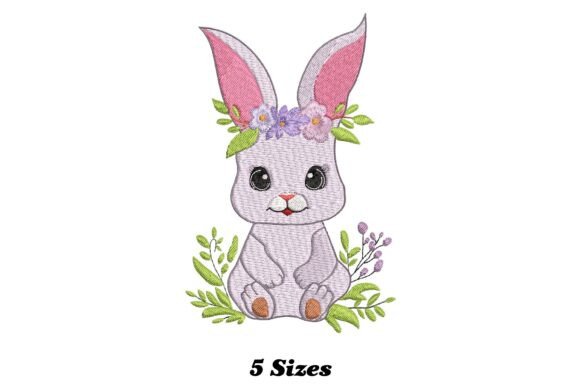
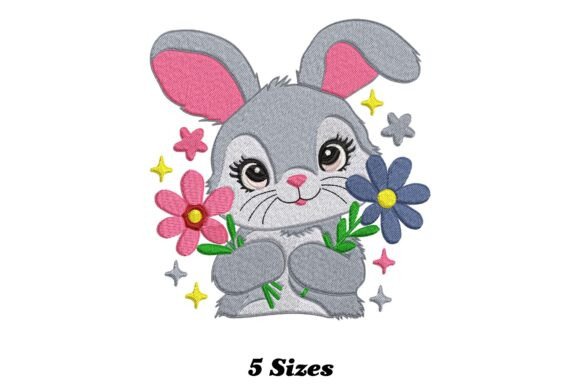
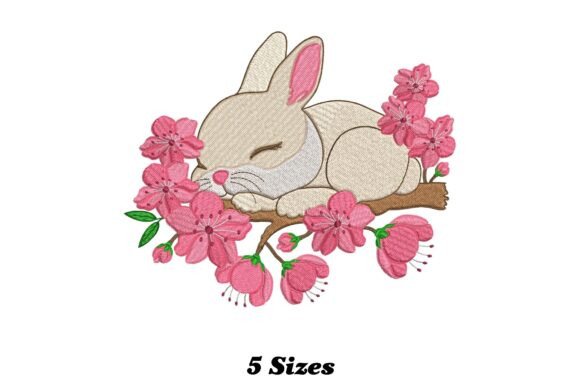
First glance at Rabbit with Orchid Flower tells me this isn’t just another woodland animal clipart knockoff. There’s a quiet confidence in how the rabbit sits—paws gently tucked, ears relaxed but alert—while the orchid curls beside it like a soft secret. The composition balances asymmetry and calm: no forced centering, no cluttered background, no competing elements. It reads as a single gesture—not two motifs pasted together. That matters when you’re stitching for real people who notice subtlety: a new parent choosing nursery decor, a boutique owner curating spring-themed aprons, or an Etsy seller building a cohesive collection of handmade gifts.
Where It Shines (and Where It Asks for Care)
I tested Rabbit with Orchid Flower on a medium-weight cotton twill tote bag—my go-to for client samples—and the result landed exactly where I hoped: gentle but distinct, charming without cloying. The satin stitch on the orchid petals held crisp edges, and the rabbit’s fur texture came through clearly in fill stitch without overloading the fabric. It worked beautifully on a lightweight linen tea towel too, especially when paired with soft ecru thread on natural linen—no stabilizer bleed, no puckering.
But here’s what I noticed on trickier surfaces:
- Caps and curved seams: The design’s gentle arc fits well on front-panel embroidery—but avoid placing it near the crown seam unless you’ve tested hoop placement and fabric stretch first. The orchid’s lower petal extends slightly, and that detail can distort if the fabric shifts mid-stitch.
- Baby onesies and thin knits: Use a light cutaway + tear-away combo stabilizer. The stitch density feels moderate—not sparse, not aggressive—but on ultra-thin cotton interlock, the rabbit’s ear tip and orchid stem showed slight shadowing without proper backing.
- Dark fabrics: This design relies on shape and contour more than heavy outlining, so high-contrast thread is essential. On navy sweatshirts, I switched from standard ecru to a warm oat thread for the rabbit and a soft lavender for the orchid—suddenly, it breathed. Without that intentional thread color choice, it faded into the background.
- Textured fabrics like terry cloth or bouclé: Save this for smoother surfaces. The fine lines in the orchid’s center and the subtle whisker details get lost in nap or loop variation.
Real Project Fit: More Than Just “Adorable”
Last week, I used Rabbit with Orchid Flower on a set of personalized baby pillow covers for a local boutique. The client wanted something gender-neutral, nature-connected, and heirloom-soft—not cartoonish. This design delivered. Because the rabbit isn’t overly stylized and the orchid leans botanical rather than florist-perfect, it avoided looking dated or theme-park themed. Customers responded to its quiet warmth: one note said, “It feels like a lullaby stitched in thread.”
It also translated cleanly into digital assets. I dropped Rabbit with Orchid Flower into a printable mockup for an Etsy listing—light gray background, minimalist typography—and it held visual weight without shouting. That’s rare for woodland-themed embroidery files, which often lean either too delicate (vanishing on dark mockups) or too bold (clashing with refined branding). This one walks the line.
What It Adds to Your Craft Business—Beyond Aesthetics
As someone who’s reviewed hundreds of embroidery files for small shop owners, I can say this: Rabbit with Orchid Flower quietly lifts perceived value. It doesn’t scream “handmade!”—it feels handmade, with intention behind every curve. That builds trust. When your customer sees this on a custom embroidered sweatshirt or a holiday kitchen towel, they don’t think “mass-produced design.” They think “someone chose this carefully.”
That impression matters for Etsy sellers pricing hand-stitched items at $45–$75, for craft fair vendors bundling embroidered patches with seed packets, or for apparel decorators offering boutique-branded staff uniforms. It also scales well: use it solo on a pocket, repeat it subtly along a hemline, or pair it with a simple monogram—never fighting for attention, always enhancing.
Design Notes You’ll Want Before Stitching
Before committing to your first finished product, take these practical steps:
- Run a test on scrap fabric that matches your final project’s weight and weave—even if it’s just a corner of your tote bag lining.
- Check thread color contrast in both daylight and indoor lighting. What reads softly in morning sun may vanish under pendant lights.
- Review stitch density visually in your embroidery software. Look for tight clusters—especially where the orchid stem meets the rabbit’s shoulder—that could cause stiffness or thread breakage on stretchy knits.
- Confirm hoop size compatibility. If you’re working with a 4×4 hoop, verify the design fits comfortably with at least ¼" margin—no last-minute scaling that blurs fine details.
- Inspect small features: the tip of the rabbit’s ear, the inner curve of the orchid petal, the negative space between paw and ground. These are your clarity checkpoints.
- Test it in black-and-white mockups. If the silhouette holds up without color cues, you’ve got strong design bones.
- Compare performance on light vs. dark fabric backgrounds using your actual thread palette—not default software colors.
- Use appropriate stabilizer for your fabric type. Don’t assume “medium” means the same thing across cotton poplin, fleece, and denim.
- Verify licensing terms before selling finished products or reselling the digital embroidery file. Commercial use isn’t automatic—even for designs labeled “for machine embroidery.”
Final Thought: A Design That Grows With You
Rabbit with Orchid Flower isn’t flashy—but it’s reliable in the way seasoned designers value most. It works for baby embroidery and holiday embroidery without needing seasonal tweaks. It supports custom apparel and embroidered patch production without demanding special equipment. It fits within the Woodland Animals category but avoids cliché by leaning into botanical grace instead of forest whimsy alone.
If you’re building a craft business around thoughtful, tactile quality—or simply want a machine embroidery design that feels like a quiet collaboration between maker and motif—this one earns its place in your design assets. Not as filler. Not as trend bait. But as a steady, soulful companion for real embroidery projects.