Motherhood Embroidery Design Review
First Impression: Warm, Lively, and Professionally Handmade
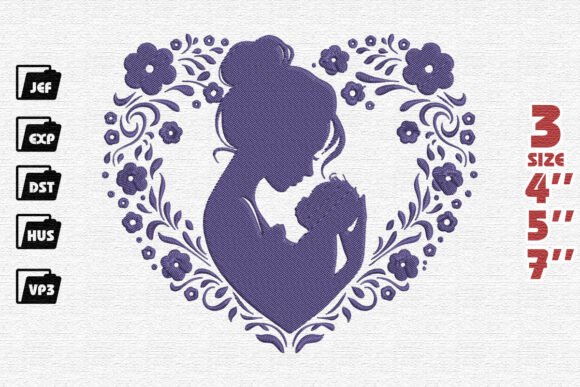
As an embroidery designer who’s developed hundreds of commercial designs for small businesses—from artisanal bakeries to indie florists—I opened Motherhood expecting charm. What I found was more: a design that balances approachability with quiet sophistication. The title alone signals emotional resonance, while the description—“a lively and creative touch that brings personality to any item”—hints at versatility without sacrificing cohesion. It doesn’t read as overly cutesy or stiffly formal. Instead, Motherhood feels intentionally warm, modern-classic, and quietly confident—ideal for brands that value authenticity over trend-chasing.
Real-World Business Use: Where Motherhood Shines
This machine embroidery design excels across high-visibility small business merch. On staff aprons for a local café or boutique, it reads clearly at 3–4 inches wide—neither overwhelming nor lost in fabric texture. As an embroidered patch sewn onto tote bags or denim jackets, it adds tactile distinction without competing with other branding elements. For cap embroidery, especially on structured front panels, Motherhood holds its shape well when scaled appropriately—its clean outlines and balanced negative space prevent visual crowding.
It also works beautifully as a subtle chest accent on custom apparel: think linen shirts for a flower shop team or organic cotton tees for a wellness studio. As a product packaging accent—say, stitched onto muslin gift tags or reusable produce bags—it elevates perceived value. And for Etsy sellers and handmade brands, Motherhood strengthens brand identity by reinforcing care, connection, and intentionality—qualities customers actively seek in artisanal goods.
Where to Use Motherhood Thoughtfully
Like any strong embroidery file, Motherhood demands context-aware application. Avoid placing it below 2 inches tall on curved surfaces like cap fronts or sleeve cuffs—fine details may blur or distort. If your small business uses dark uniforms (navy, charcoal, deep burgundy), verify thread color contrast during mockup: light ecru or soft sage may not pop without careful testing. Similarly, high stitch density areas—especially if the design includes delicate inner linework or tightly spaced letterforms—require extra stabilizer on lightweight or textured fabrics like slubbed linen or terry cloth towels.
For frequent-wash items (e.g., restaurant aprons or daycare staff shirts), confirm that the design avoids ultra-fine satin stitches or overly dense fill areas that could snag or wear prematurely. And while Motherhood is inherently flexible, resist cramming it into tiny product labels or seam tabs—its strength lies in presence, not miniaturization.
Brand Identity & Customer Trust: More Than Just Aesthetic
Motherhood isn’t just decoration—it’s a quiet signal of values. When used consistently across aprons, tote bags, and staff caps, it builds visual consistency that reinforces professionalism and cohesion. Customers subconsciously associate that repeated, well-executed embroidery with attention to detail and care—key drivers of trust for small businesses competing against mass-produced alternatives.
For Mother S Day–aligned campaigns, it adds emotional resonance without leaning into cliché. That matters: buyers increasingly favor brands that reflect shared humanity—not just seasonal tropes. And because it reads as handmade yet polished, it supports premium pricing for custom apparel and boutique merchandise. In short, Motherhood helps your finished product feel intentional, grounded, and human-centered.
Practical Designer Notes Before Production
Before cutting thread or sending files to your embroidery digitizer:
- Test in black and white first. This reveals spacing issues, legibility gaps, and unintended visual weight shifts you might miss in color.
- Check small patch viability. Resize the embroidery file down to 2.25" and run a virtual stitch simulation—look for collapsed letterforms or fused outlines.
- Review thread color contrast against your actual fabric swatches—not just screen previews. Lighting changes everything.
- Inspect spacing between elements. Tight kerning or narrow gaps between letters can vanish under stitching, especially on knit fabrics.
- Confirm hoop size compatibility. Does the design fit comfortably within your standard hoops? Oversized files risk registration drift on multi-position machines.
- Test on real fabric + stabilizer combo. A towel’s loop pile behaves very differently than a flat-weave tote—don’t assume performance.
- Create a printable mockup for client approval before stitching. Include scale reference and fabric photo background for realism.
- Compare beside existing design assets. Does Motherhood harmonize with your logo, typography, and other embroidery motifs—or clash in rhythm or weight?
- Verify commercial licensing. Since this is a digital embroidery file intended for small business merch and branded patch use, ensure your purchase grants full commercial embroidery rights—not just personal craft use.
Final Thought: A Strategic Asset, Not Just a Design
Motherhood stands out because it functions equally well as emotional storytelling and smart business tool. It doesn’t shout—it invites. It doesn’t decorate—it connects. Whether you’re launching a new line of handmade baby blankets, rebranding your pet-sitting service with heart-led messaging, or outfitting your floral studio team, this embroidery design delivers quiet authority and warmth in equal measure. Used with intention—and tested rigorously—it becomes part of your brand’s voice, not just its visuals. That’s the mark of a truly effective machine embroidery design for small business merch.