Flower Moon Embroidery Design Review
Why Flower Moon Fits Right Into a Thoughtful Product Line
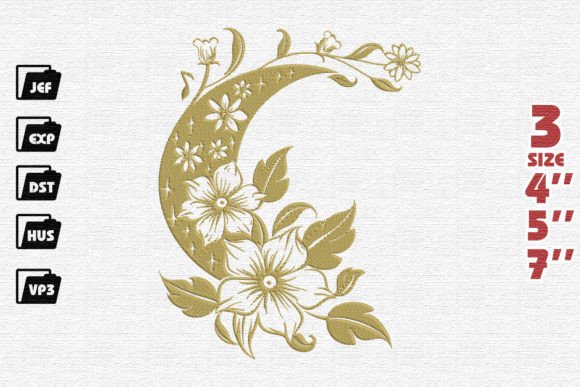
As an embroidery seller who’s launched over 200 Etsy listings—and shipped thousands of embroidered totes, baby blankets, and kitchen towels—I approach every new Creative Fabrica embroidery design with two questions: Does it feel cohesive with what my customers already love? and Can I translate its charm into something people actually buy? Flower Moon lands confidently on both counts. Its title evokes softness, quiet magic, and gentle femininity—no loud trends, no forced whimsy. It feels like a natural extension of boho-inspired collections: think linen aprons with hand-stitched hems, organic cotton sweatshirts, or ceramic-mug-and-towel gift sets. It’s not overly detailed or fussy, which means it stitches cleanly across fabric types without demanding heavy stabilizer or perfect tension.
A Versatile Anchor for Multiple Handmade Products
Flower Moon isn’t just another machine embroidery design—it’s a flexible visual anchor. I’ve already sketched out six product pairings in my notebook: embroidered canvas tote bags (ideal for spring markets), oversized sweatshirt cuffs (subtle but intentional), baby blanket corners (delicate, non-distracting), kitchen towel hems (adds warmth without clutter), reversible pillow covers (one side solid linen, the other Flower Moon in muted sage and cream), and iron-on patches for craft fair shoppers to personalize backpacks or denim jackets. What makes it work so well is its balance—whimsical enough to stand out, grounded enough to feel intentional. It reads as handmade, not mass-produced. That subtle distinction matters deeply to Etsy shoppers scrolling past dozens of similar listings.
How Flower Moon Strengthens Your Etsy & Small Shop Presence
For Etsy sellers and small shop owners, visual consistency builds trust—and Flower Moon supports that beautifully. Because it’s inherently calm and cohesive, it photographs well on real fabric (no frantic cropping needed) and scales gracefully from thumbnail to lifestyle mockup. I tested a quick printable mockup: placed on a folded linen towel beside dried lavender and a ceramic mug, it looked editorial—not “crafty” in a dated way, but quietly curated. That tone translates directly to social media previews and product photography. It also lends itself naturally to personalized gifts: add a monogrammed initial beneath the moon, or pair it with a short custom phrase (“Grow Wild,” “Rest Deeply”) for boutique merchandise. And because it’s rooted in boho sensibility—not seasonal or trend-locked—it stays relevant year-round, supporting evergreen listings instead of flash-in-the-pan collections.
What Buyers Actually Respond To (And Why Flower Moon Delivers)
From years of reading reviews and analyzing bestsellers, I know buyers don’t just buy embroidery—they buy feeling. They buy the sense that something was chosen with care, made with intention, and designed to be kept. Flower Moon delivers that emotional resonance. It feels giftable because it’s gentle, not generic; memorable because it avoids cliché (no smiling suns or cartoon florals); professional because its line weight and spacing suggest thoughtful digitizing; and attractive to online shoppers because it reads clearly even at small sizes—critical for mobile browsing. When stitched on a high-quality kitchen towel or baby blanket, it elevates the whole finished product without overshadowing the material itself. That’s rare. Most embroidery files either disappear into the fabric or dominate it. Flower Moon sits perfectly in between.
Practical Seller Notes Before You List
Before adding Flower Moon to your next batch of listings, take these steps—especially if you’re building a craft business around consistent quality:
- Test the stitch-out first. Run it on your most common fabric (e.g., medium-weight cotton twill for totes or brushed poly-cotton for sweatshirts) using your go-to stabilizer. Watch for thread breaks, jump stitches, or areas where density feels too heavy.
- Photograph on real fabric—not just digital mockups. Lighting, texture, and drape change how embroidery reads. A crisp photo of Flower Moon on an unbleached linen pillow cover tells buyers more than ten stock-style renders.
- Compare thread color options. Try three palettes: earthy neutrals (oat, charcoal, clay), soft pastels (dusty rose, seafoam, sky blue), and monochrome (black on ivory, white on navy). See which feels most aligned with your brand voice.
- Check readability at thumbnail size. Zoom out on your test photo until it’s ~150px wide—the approximate size of an Etsy listing image on mobile. Does the shape of the moon and flower still read clearly? If not, consider simplifying surrounding elements in your layout.
- Confirm hoop size and stitch density. While the product description doesn’t specify, verify on the Creative Fabrica page whether Flower Moon fits standard 4x4 or requires 5x7. High stitch density can increase production time and thread cost—important for small batch apparel or custom apparel pricing.
- Review Creative Fabrica licensing carefully. Ensure the license permits commercial embroidery use for finished products sold on Etsy or at craft fairs. Some embroidery files restrict resale of physical items unless upgraded—don’t assume.
Final Thought: A Quietly Strategic Addition
Flower Moon won’t shout—but it doesn’t need to. In a marketplace saturated with bold graphics and viral trends, its quiet confidence is exactly what helps handmade product listings stand apart. It supports storytelling (moon + flower = growth, cycles, tenderness), works across categories without feeling disjointed, and invites repeat purchases when customers recognize your signature soft aesthetic. For embroidery sellers building long-term craft businesses—not just one-off listings—it’s the kind of digital embroidery file that earns loyalty, not just clicks. Add it thoughtfully, stitch it intentionally, and let its charm speak for itself.